- Date
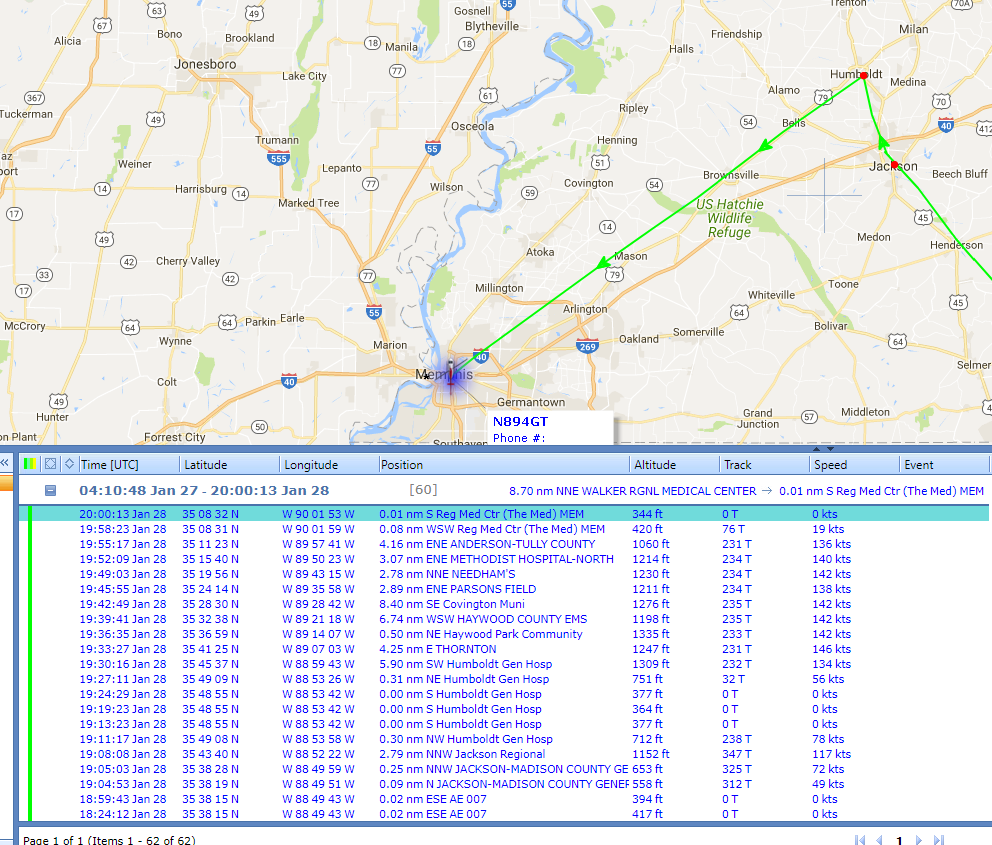
- January 28, 2018, 14:00 local (20:00 UTC)
- Place
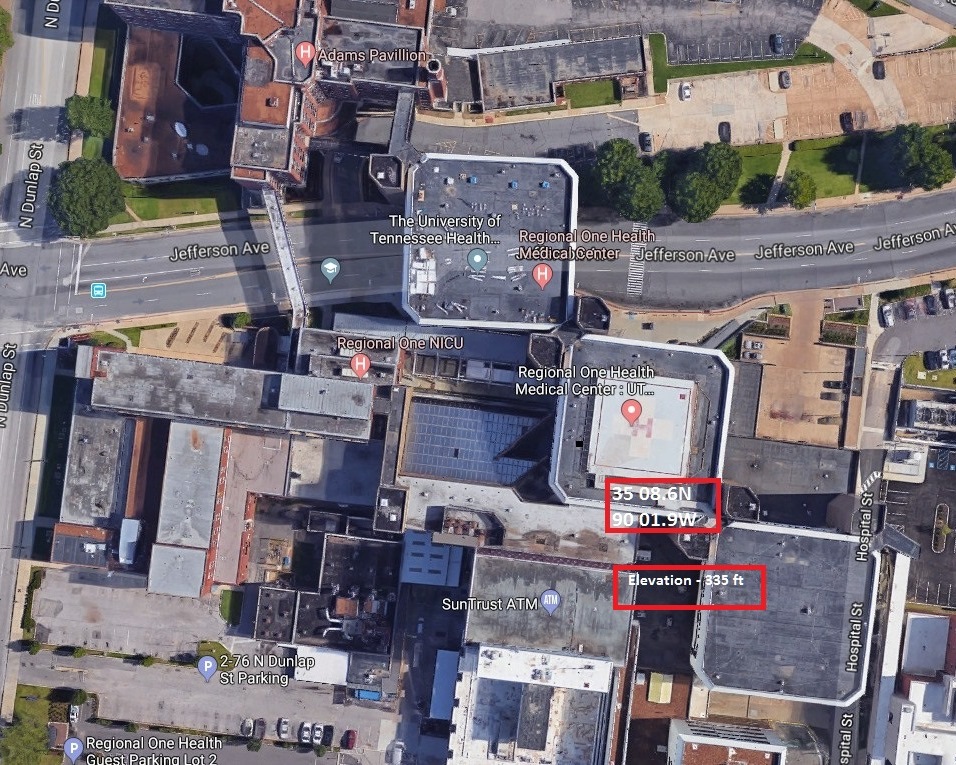
- Memphis, TN · Regional One Health Medical Center Heliport
- Injuries
- 4 uninjured
- Damage
- Minor damage
- Phase of flight
- After landing
- Aircraft
- N894GTAirbus Helicopters EC 130
- Defining event
- After landing: Miscellaneous/other
- Weather
- Visual (VMC) · Day
- Status
- Completed
- Report
- Approved by Office Director
- Investigation class
- Class 3
- NTSB office
- Eastern Region Aviation
- Parties
- FAA/FSDO, Air Evac EMS, Safran Helicoptor Engines, Airbus Helicopters, BEA
- FAA report
- 20180128003219I
- Case key
- 96689
From the NTSB’s public API. By law, NTSB reports can’t be used as evidence in lawsuits over the incident.
On this page
Probable cause
The pilot’s failure to lock the collective pitch control after landing, and the mechanic’s failure to properly balance the collective pitch control after converting the helicopter to a single-pilot configuration, which resulted in an uncommanded collective movement and subsequent hard landing.
Findings · 2
NTSB’s coded findings. Those marked are part of the probable cause; the rest are factors or other findings. Under each, the cases with the same finding.
Sequence of events
The events NTSB coded, in order, by phase of flight. The defining event is the one that best describes the accident. Under each, the cases with the same event anywhere in their sequence.
Analysis
The pilot of the helicopter air ambulance performed an approach and landing to a rooftop heliport in gusting wind conditions, during which he reduced collective pitch control friction to more readily apply collective control inputs. After landing, he started the after-landing portion of the checklist and turned the throttle twist grip on the collective from FLIGHT to IDLE, believing that he had engaged the collective lock. Shortly thereafter, the collective "popped up," and the helicopter became airborne. He immediately grabbed the cyclic with his right hand, the collective with his left hand, and twisted the twist grip to FLIGHT. The helicopter then landed hard, resulting in minor damage. Review of onboard video revealed a sequence of events consistent with the pilot’s statement, and recorded data indicated that the collective rose up consistent with it not locked in the down position and resulted in the engine transitioning from IDLE to FLIGHT. This confirmed the pilot’s observation that the collective rose uncommanded. The helicopter was designed to be convertible from a dual-pilot configuration (for activities such as training), to single-pilot configuration (for activities such as air ambulance). Two days before the incident, the helicopter had been converted to the single-pilot configuration by a mechanic. This conversion required that the collective be balanced to avoid uncommanded movement; however, post-incident examination of the helicopter revealed that the collective would rise unassisted, indicating that the collective was improperly balanced after the helicopter was converted to the single-pilot configuration.
Factual narrative
HISTORY OF FLIGHT On January 28, 2018, about 1400 central standard time, an Airbus Helicopters EC 130 T2, N894GT, incurred minor damage when it was involved in an incident in Memphis, Tennessee. The pilot, flight nurse, flight paramedic, and patient were not injured. The helicopter was operated as a Title 14 Code of Federal Regulations (CFR) Part 135 air ambulance flight. The pilot reported that he was approaching the rooftop heliport to land at the Regional One Health Medical Center. While on a long final approach to the heliport, there was a left crosswind present and he had to reduce collective pitch control friction three times in order to move the collective as fast as he felt he needed to. He brought the helicopter to a hover as he reached the heliport, then turned the helicopter to the right and landed. After landing, he started the after-landing portion of the checklist, then turned the throttle twist grip on the collective from "FLY to "IDLE," believing that he had engaged the collective lock. He then turned the horn mute switch to mute, grabbed the cyclic pitch control with his left hand, and reached for the clock start button with his right hand. As he was reaching for the clock button, the collective "popped up," and the helicopter became airborne. He immediately grabbed the cyclic with his right hand, the collective with his left hand, and twisted the twist grip to "FLY." The helicopter then landed hard, and the emergency locator transmitter (ELT) activated. After exiting the helicopter, the flight nurse advised the pilot that there was damage to the sheet metal of the helicopter. Security camera video also showed the incident sequence in its entirety. The pitch of the rotor blades could be seen changing as the helicopter became airborne, and rotor coning was observed. PERSONNEL INFORMATION According to Federal Aviation Administration (FAA) and pilot records, the pilot held a commercial pilot certificate with ratings for rotorcraft-helicopter and instrument helicopter, and private privileges for airplane single-engine land. The pilot attended an EC 130 pilot transition class at Airbus Helicopters from November 6 to November 10, 2017, and completed his 14 CFR Part 135 Airman Competency/Proficiency Check on January 17, 2018. He reported that he had accrued 6,267 total hours of flight time, about 9 of which were in the incident helicopter make and model. AIRCRAFT INFORMATION The single-rotor helicopter of conventional design was equipped with an automatically varying, three-bladed Starflex main rotor and an enclosed tail fan anti-torque device, known as a Fenestron. The helicopter’s 802-shaft horsepower Turbomeca Arriel 2D turboshaft engine was equipped with a full authority digital engine control (FADEC) and a dual hydraulic system. The helicopter was designed to be convertible from a dual-pilot configuration (for activities such as training), to a single-pilot configuration (for activities such as air ambulance). AIRPORT INFORMATIONThe heliport was located on a roof of a building, about 85 feet above street level. It was surrounded by obstacles except for a portion of the heliport that faced northeast. The touchdown and liftoff area (TLOF) was marked with a red colored “H” centered inside a white cross. The border of the TLOF was painted white. It was equipped with a lighted windsock and yellow perimeter lights and measured 75 feet wide by 75 feet long. FLIGHT RECORDERS The helicopter was equipped with an engine data recorder (EDR) that exclusively recorded data sent by the FADEC in a non-volatile memory component for maintenance purposes. For both channels, engine parameters, logical words, and failure flags were recorded. It also was equipped with an Appareo Vision 1000 unit, which recorded images, audio, and parametric data on a removable SD memory card. In addition to the internally recorded data obtained from the Vision 1000, other parameters and observations were obtained by viewing the aircraft's cockpit instruments and security camera video. Review of the onboard video depicted a series of events consistent with the pilot’s statement. For a complete discussion of the onboard video, refer to Onboard Image Recorder factual report located in the public docket. Review of EDR data indicated that, during the incident portion of the flight, the recorded transducer position for the collective showed the collective rising from an unlocked position with the helicopter’s engine transitioning from “Idle” to “Flight.” WRECKAGE AND IMPACT INFORMATION Examination of the helicopter revealed minor damage. The skid type landing gear was spread out, and both landing gear cross tubes were deformed. The forward belly panels were dented from contact with the forward landing gear cross tube, and the aft closeout panels were dented from contact with the aft landing gear cross tube. On January 31, 2018, a Federal Aviation Administration (FAA) inspector traveled to Air Evac's Jackson, Tennessee, helicopter operations base to determine if the collective system had been properly balanced in accordance with the aircraft maintenance manual. Two days before the incident, a mechanic at the base had removed the right seat flight controls and had configured the helicopter for single-pilot operation. The collective was placed in the full-down position to attach a spring scale to the twist grip to measure the force required to pull it through its upward travel; however, once the mechanic removed his hand from the collective prior to attaching the spring scale; the collective immediately climbed unassisted to approximately the mid-travel position, indicating that the collective was improperly balanced for the single-pilot configuration. It was determined that the spring force was much greater (approximately twice that required) than it should have been in the upward direction. ADDITIONAL INFORMATION After the incident, as an additional risk mitigation factor, Air Evac EMS, Inc. changed theirabbreviated checklist for the EC130T2, so that the first item on the checklist after landing is to roll the twist grip to “IDLE” and then place and confirm the collective pitch is “Down/locked." A “NOTE” was also added to “Visually and verbally confirm collective is locked.”
Aircraft
- Registration
- N894GT
- Reported as
- Airbus Helicopters EC 130 (T2)
- Category
- Helicopter
- Serial number
- 8185
- Built
- 2015
- Airframe hours
- 88.8
- Engine
- Turbomeca Arriel 2D, 802 horsepower, turbo shaft
- Damage
- Minor damage
- Flight
- Other work use · Part 135
- Operator
- Air Evac Ems Inc, doing business as Air Evac Lifeteam
- Registered owner
- Guardian Flight LLC
- Airworthiness certificate
- Standard, Normal
- Last inspection
- AAIP · January 27, 2018 · 1 hours before
- Departed
- None · Humboldt, TN
- Destination
- PVT · Memphis, TN
- Flight plan
- Company VFR
- Airport
- PVT · Helipad, runway H1, 75 × 75 ft, concrete
- Equipment
- Video recording device, Satellite tracking device, ADS-B, Electronic flight bag or handheld device, Electronic multifunction display, Electronic primary flight display
Matched to the registry by N-number and the event date; the registry’s history has gaps, so older matches can be wrong. Compare the reported make and model.
Flight crew
As NTSB recorded them. NTSB leaves out names.
- Role
- Pilot
- Age
- 58
- Injuries
- None
- Certificate
- Commercial
- Airplane ratings
- Single-engine land
- Instrument ratings
- Helicopter
- Medical
- Class 2, With waivers/limitations
- Last flight review
- January 17, 2018
- Seat
- Right
- Restraint
- 4-point
- Flight hours
- 6,267 total · 9 in this make and model · 5,370 as pilot in command · 41 in the last 90 days · 28 in the last 30 days · 1 in the last 24 hours
Weather
- Conditions
- Visual (VMC) · Day
- Wind
- 20° at 11 knots, gusting 18
- Lowest ceiling
- None
- Temperature
- 59 °F, dew point 23 °F
- Altimeter
- 30.22 inHg
- Observed at
- MEM, 6 nm away
Docket · 18
The files NTSB released with the investigation on February 8, 2022, on NTSB’s docket system: statements, records, photos and specialists’ reports. 189 MB in all.
FAA reports on this event · 1
The FAA’s own accident and incident reports, matched to the aircraft by N-number and date.