- Date
- September 1, 2022, 17:00 local (21:00 UTC)
- Place
- Orlando, FL · Taxiway A7, HOLD 2 Pad
- Injuries
- 1 fatal, 1 serious
- Damage
- Substantial damage
- Phase of flight
- Taxi
- Aircraft
- N43RGDiamond Aircraft Industries DA 42
- Defining event
- Taxi-to runway: Windshear or thunderstorm
- Weather
- Instrument (IMC) · Day
- Status
- Completed
- Report
- Approved by Office Director
- Investigation class
- Class 3
- NTSB office
- Eastern Region Aviation
- Parties
- FAA/FSDO
- FAA report
- 20220901015649A
- Case key
- 105848
From the NTSB’s public API. By law, NTSB reports can’t be used as evidence in lawsuits over the accident.
On this page
Probable cause
The flight crew’s insufficient evaluation of the deteriorating weather conditions in the area, which resulted in an encounter with a microburst.
Findings · 3
NTSB’s coded findings. Those marked are part of the probable cause; the rest are factors or other findings. Under each, the cases with the same finding.
Sequence of events
The events NTSB coded, in order, by phase of flight. The defining event is the one that best describes the accident. Under each, the cases with the same event anywhere in their sequence.
Analysis
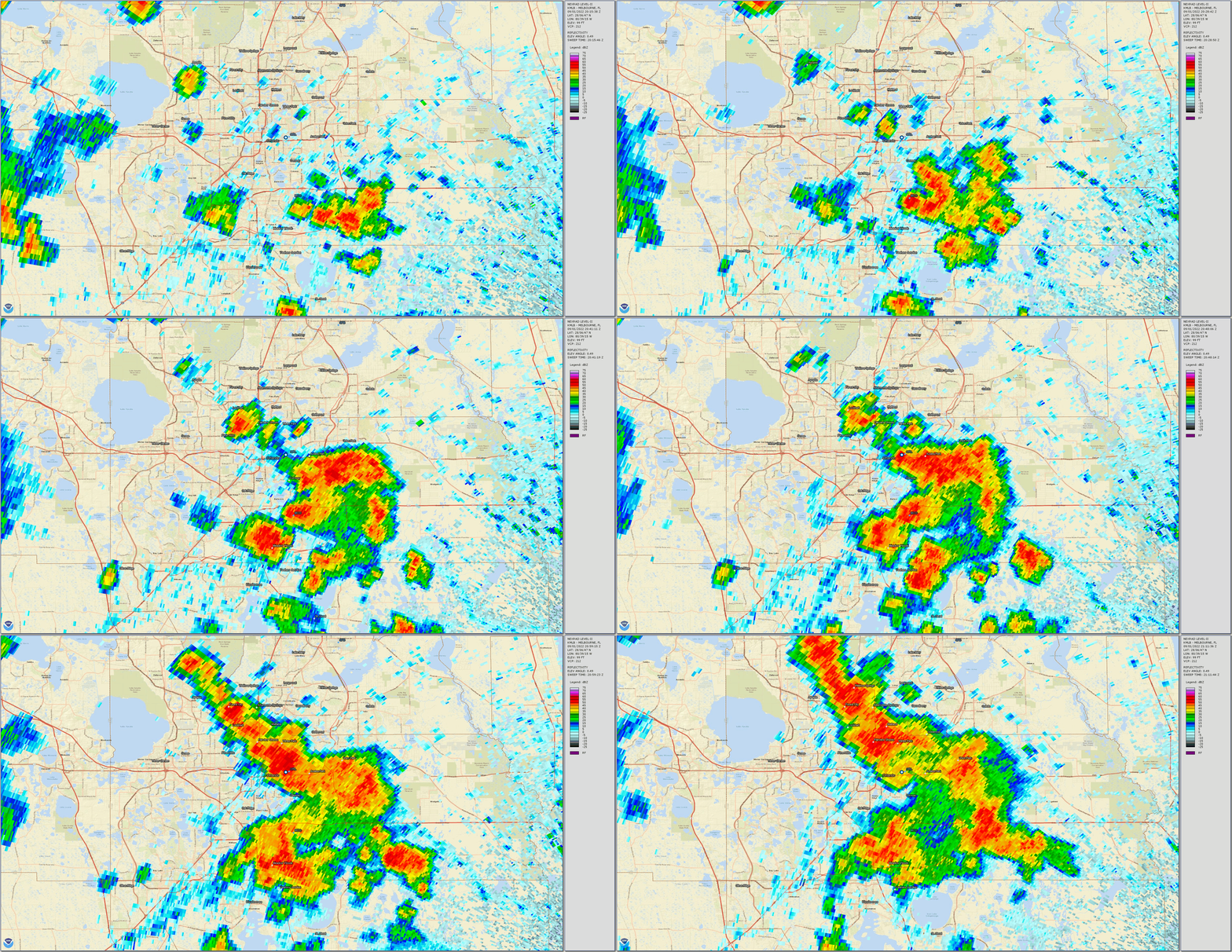
The commercial pilot and his flight instructor were preparing to depart on a local flight when the accident occurred. They taxied to the runway and continued the pre-takeoff and engine runup tasks. While at the holding pad, the weather deteriorated significantly to include thunderstorms, heavy rain, and high wind gusts to 54 knots. The pilots elected to hold their position to wait until the weather conditions improved. The instructor applied down elevator control and moved the left aileron into the wind. Review of available weather data indicated that a microburst caused the left wing to raise and the airplane rolled over, coming to rest inverted. The flight instructor in the left seat was seriously injured, and the commercial pilot in the right seat was fatally injured. The airplane was substantially damaged. The surviving flight instructor reported that they received a weather briefing before the flight and that there was a small area of precipitation about 7 miles to the south, slowly moving north; they expected the area of precipitation would be in the vicinity after their departure. He stated that the cell did not appear to be developing significantly when observed on their radar. An examination of meteorological data revealed that the pilots requested and received a weather briefing from a commercial flight planning service about 1 hour and 18 minutes before the accident. The briefing included convective SIGMETs for the area. The surface observations received included wind gusts to 36 knots and thunderstorms in progress to the south. If the pilots had checked the current weather at the airport 7 miles to their south before taxiing, they would have noticed that the weather there was deteriorating rapidly. The examination of the weather products revealed that the pilots were provided and reviewed the weather information that they encountered. The wreckage was examined to determine the survivability aspects of the accident. The cockpit canopy was crushed and the overroll bar was fractured. About 4.4 inches of vertical space between the middle floor tunnel cover and the overroll bar was lost. The cockpit seats and restraints were undamaged. The amount of force applied to the airframe during the upset event could not be determined. The rolling motion of the airplane likely moved the pilots out of position before impact. This change in position, in conjunction with the decrease in occupiable space from the overhead structure deformation and stretch of the seat belts, caused the injuries sustained by the occupants.
Factual narrative
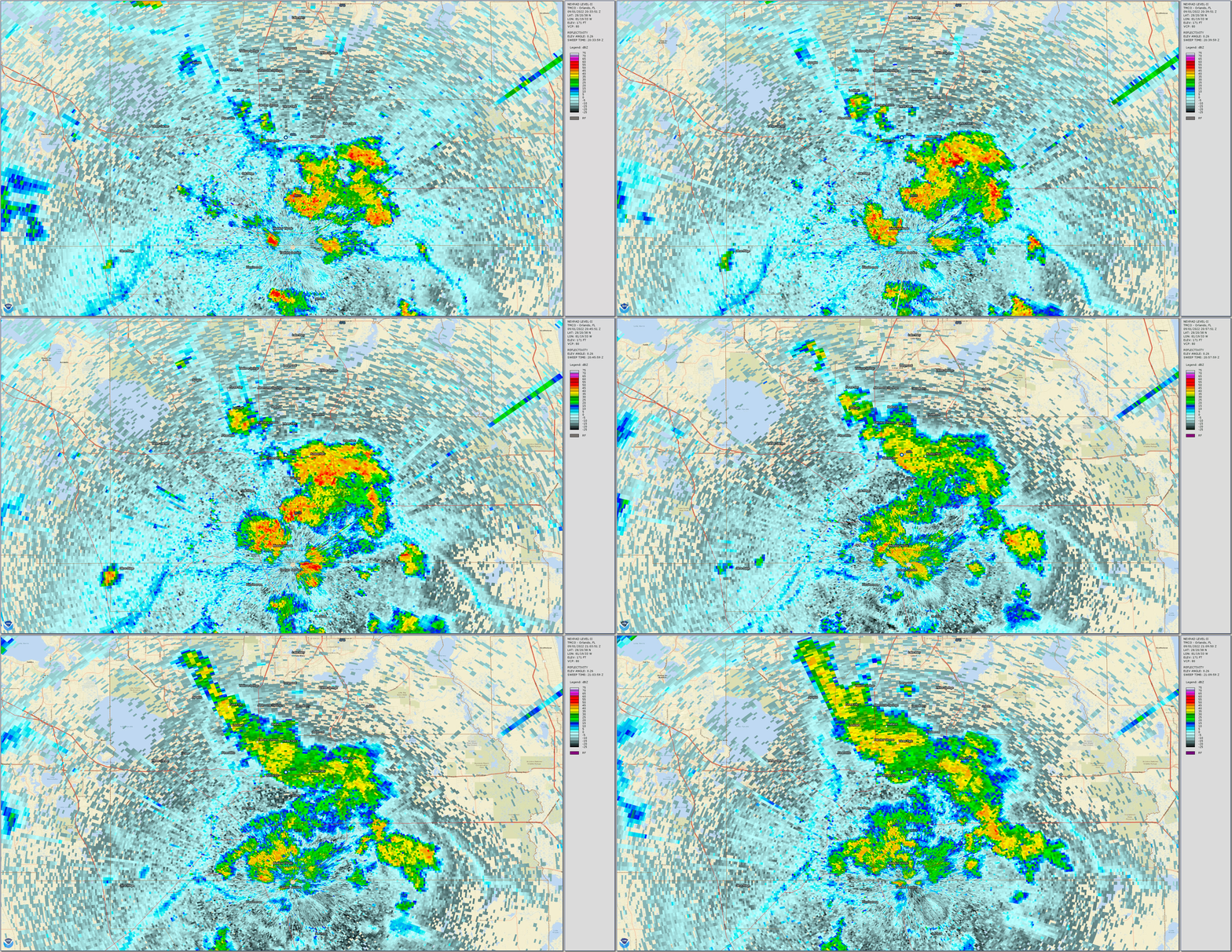
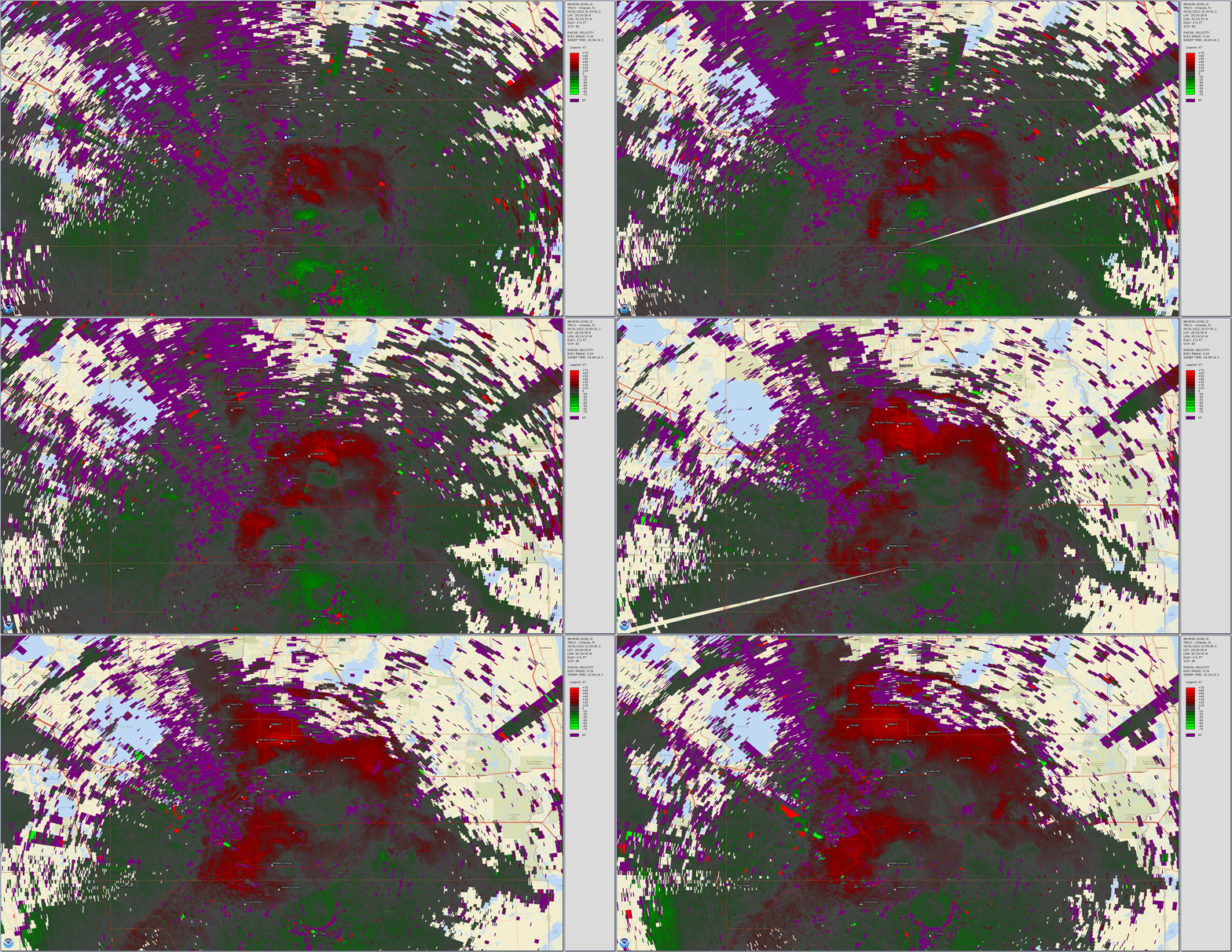
On September 1, 2022, about 1700 eastern daylight time, a Diamond Aircraft Industries DA 42 NG, N43RG, was substantially damaged when it was involved in an accident in Orlando, Florida. The commercial pilot was fatally injured and a flight instructor was seriously injured. The airplane was operated as a Title 14 Code of Federal Regulations Part 91 instructional flight. The local instructional flight was to originate at Orlando Executive Airport (ORL), Orlando, Florida. The commercial pilot, who was in the right front seat, was in the process of adding a multiengine rating to his commercial certificate. He was in the right seat because he expressed interest in eventually obtaining a flight instructor rating. The flight instructor reported that he and his student checked the weather and determined that there was a small area of precipitation, about 2 nm in diameter, over Orlando International Airport (MCO), located 7 miles south of ORL, which was slowly moving north, and would be in the vicinity of ORL after their departure. He stated that the cell did not appear to be developing significantly as shown on the radar loop. He stated that a weather briefing obtained through ForeFlight forecasted thunderstorms in the vicinity with winds up to 6 knots during the time of flight. The flight instructor reported that when they started the engines, the current weather observation at 1621 included wind from 060°at 9 knots, thunderstorms in the vicinity, and distant lightning in all quadrants. At 1640, they requested to taxi to runway 7where they performed pre-takeoff checks at the HOLD 2 pad at taxiway A7. About 1645, they completed their pre-takeoff checks. The crew observed precipitation over the departure end of the runway, so they elected to hold in place until the weather improved. During this time, the weather deteriorated further, with wind gusting to 40 knots, as advised by air traffic control, and visibility dropping to zero. They then elected to hold in place rather than attempt to taxi back to the ramp. The flight instructor reported that shortly there after, the wind gusts increased to 60 knots. The instructor applied down elevator control and moved the left aileron into the wind. He reported that the left wing was bouncing around a little more than the right wing. The airplane’s left wing then lifted and the airplane rolled to the right. The flight instructor attempted to shut down the engines, and the airplane rolled over inverted. First responders observed the airplane inverted and responded to assist the crew. According to autopsy report from the Office of the Medical Examiner, District Nine, Orlando, Florida, the cause of death of the pilot was cervical vertebral fracture with spinal cord trauma due to blunt force of the head and neck. Testing for ethanol and drugs was negative. At the time of the accident, the National Weather Service Surface Analysis Chart, centered over the southeastern United States, depicted a stationary frontalboundary that stretched from a low-pressure system off the South Carolina coast westward across central Georgia into another low over Alabama, and then southwestward into Louisiana. The accident site was located south of the stationary front in a warm side of the front. The surface observation for ORL at 1659 (about the time of the accident) included wind from 100° at 32 knots with gusts to 54 knots, wind varying between 060° and 130°, ¼ mile visibility, runway visual range on runway 7 varying between 400 ft and greater than 6,000 ft, thunderstorm and heavy rain, fog, scattered clouds at 1,700 ft above ground level (agl), broken ceiling at 2,900 ft agl, overcast skies at 6,000 ft agl, temperature of 23° Celsius (C), dew point temperature 21°C, and an altimeter setting of 30.00 inches of mercury (inHg). The surface observation remarks stated, automated station with a precipitation discriminator, peak wind at 1655 from 120° at 54 knots, lightning distant all quadrants, pressure rising rapidly, 0.39 inches of precipitation since 1653, temperature 22.8°C, dew point temperature 20.6°C. The ORL surface observation at 1621, while the crew were preforming preflight and engine start duties, included wind from 060°at 9 knots, thunderstorms in the vicinity, and distant lightning all quadrants. The ORL surface observation at 1641, 1 minute after the crew requested taxi clearance, included wind from 150°at 11 knots with gusts to 16 knots, thunderstorms, and distant lightning all quadrants, and thunderstorms began at 1635. Lightning data revealed 1,053 lightning flashes reported within 25 miles of the accident site within 15 minutes prior to or following the accident time with the closest lightning flash occurring 800 ft south of the accident site at the time of the accident. At 1631, MCO issued a special observation at 1631 (9 minutes before the crew requested taxi clearance) that included wind from 070° at 16 knots with gusts to 36 knots, heavy rain and thunderstorms, thunderstorms stationary and frequent lightning all quadrants. The MCO surface observation at 1606, or 54 minutes before the accident, reported wind from 090° at 6 knots with thunderstorms. There was a convective SIGMET advisory valid for the accident site at the accident time. Any convective SIGMET implies severe or greater turbulence, severe icing, and low level wind shear. SIGMET 01E, issued at 1555, included a warning of area thunderstorms moving little, with tops above flight level (FL) 450. It was superseded by SIGMET 04E at 1655, which included a warning of severe thunderstorms moving little, with tops above FL450, and wind gusts to 50 knots possible. According to Advisory Circular 00-45G, Change 2 (Aviation Weather Services), any convective SIGMET implies severe or greater turbulence, severe icing, and low-level wind shear. A convective SIGMET may be issued for any convective situation which the forecaster feels is hazardous to all categories of aircraft. Bulletins are issued hourly atHour+55. The text of the bulletin consists of either an observation and a forecast or just a forecast. The forecast is valid for up to 2 hours. The closest Terminal Aerodrome Forecast (TAF) to ORL was issued at MCO. The MCO TAF issued at 1632, valid between 1600 and 2100, included temporary conditions for the time period between 1600 and 1900 that called for variable wind of 20 knots with gusts to 40 knots, 3 miles visibility, thunderstorms and moderate rain, and a broken ceiling of cumulonimbus clouds at 3,500 ft agl. The flight crew requested and received a weather briefing from ForeFlight at 1542, with additional MCO and ORL surface observations received at 1641, along with the updated MCO TAF from 1632. A High-Resolution Rapid Refresh (HRRR) model sounding was created for the approximate accident site coordinates for 1600. The HRRR sounding indicated an unstable atmosphere based on the Lifted Index of -7.5 and the Convective Available Potential Energy (CAPE) of 3,340 Joules/kilogram (J/kg), with the maximum vertical velocity (MVV) for this atmosphere was calculated as 82 meters/second (about 16,141 ft per minute). Outside of cumulonimbus clouds, RAOB (the complete Rawinsonde Observation program) indicated cloud cover in two layers between 4,000 ft and 12,000 ft with no icing below 14,000 ft. The strongest surface wind gusts potential, due to microburst, downburst, or outflow, indicated by the RAOB’s WindEx parameter was 56 knots or 64 miles per hour (mph). Convective clouds can produce downdrafts, outflow boundaries and gust fronts during the mature stage of their life cycle, which can create an environment favorable for unexpected changes in wind direction and speed. According to the Aeronautical Information Manual (AIM) section 7-1-2430 on microburst, they are typically relatively small area less than 1 to 2 ½ miles in diameter of strong divergent winds and downdrafts that can reach 6,000 feet per minute. Microburst can be found in convective clouds, usually embedded in heavy rain or in benign appearing virga. When there is little or no precipitation at the surface accompanying the microburst, a ring of blowing dust may be the only visual clue of its existence. The Terminal Doppler Weather Radar from Orlando (TMCO) recorded velocity data that indicated a divergent wind velocity signature to the east and above the accident site at the accident time. The accident occurred at the HOLD 2 position, adjacent to taxiway A7. The wreckage was inverted and confined to the taxiway surface. An inspector with the Federal Aviation Administration responded to the accident site and examined the wreckage. Structural damage was noted on both wings, the fuselage, and the empennage. The composite tail boom fractured about 4 ft aft of the rear cabin. The horizontal stabilizer and rudder fractured from the vertical stabilizer and rudder. The wreckage was recovered to an aircraft salvage facility where an additional survival factors examination was conducted.The canopy was not attached to the fuselage when examined. There was crushing damage to the canopy, which was hinged and designed to rotate up and forward to access the cockpit. The overroll bar had fractures consistent with overload. The distance between the middle tunnel cover (at the elevator trim wheel) and the overroll bar was measured at 29.1 inches (an exemplar airplane measured 33.5 inches, or a loss of 4.4 inches). There was no damage noted to the seats or restraints. The amount of force applied to the airframe during the upset event could not be determined.
Aircraft
- Registration
- N43RG
- Reported as
- Diamond Aircraft Industries DA 42 (NG)
- Category
- Airplane
- Serial number
- 42.N455
- Built
- 2022
- Airframe hours
- 285
- Engines
- Austro E4-C, 165 horsepower, reciprocatingAustro E4-C, 165 horsepower, reciprocating
- Damage
- Substantial damage
- Flight
- Instructional · Part 91
- Operator
- MyFlight LLC, doing business as MyFlight Flight Training
- Registered owner
- Twin Star Aviation Holdings
- Airworthiness certificate
- Standard, Normal
- Last inspection
- 100 hour · July 27, 2022 · 86 hours before
- Flight plan
- IFR
- Airport
- ORL · Orlando Executive, runway 7, 6,004 × 150 ft, asphalt
- Equipment
- Electronic primary flight display, Electronic multifunction display, Auto-pilot, ADS-B, Stall warning system, Satellite tracking device
Matched to the registry by N-number and the event date; the registry’s history has gaps, so older matches can be wrong. Compare the reported make and model.
Flight crew · 2
As NTSB recorded them. NTSB leaves out names.
- Role
- Flight instructor
- Age
- 22
- Injuries
- Serious
- Certificates
- Flight instructor, Commercial
- Airplane ratings
- Multi-engine land, Single-engine land
- Instrument ratings
- Helicopter
- Medical
- Class 1, Without waivers/limitations
- Last flight review
- October 19, 2021
- Seat
- Left
- Restraint
- 3-point
- Flight hours
- 312 total · 148 in this make and model · 255 as pilot in command · 80 in the last 90 days · 71 in the last 30 days · 6 in the last 24 hours
- Role
- Student pilot
- Injuries
- Fatal
- Certificate
- Commercial
- Airplane ratings
- Single-engine land
- Instrument ratings
- Airplane
- Medical
- Class 1, Without waivers/limitations
- Last flight review
- May 30, 2022
- Seat
- Right
- Restraint
- 3-point
- Toxicology
- Performed
- Flight hours
- 3,000 total · 6 in this make and model
Weather
- Conditions
- Instrument (IMC) · Day
- Visibility
- 0.25 statute miles
- Lowest ceiling
- 1,600 ft broken
- Temperature
- 79 °F, dew point 66 °F
- Altimeter
- 29.95 inHg
- Observed at
- KORL
- METAR
- KORL 012108Z VRB05G49KT 1/4SM R07/0400V6000FT +TSRA BKN016 BKN029 OVC040 26/19 A2995 RMK AO2 PK WND 12054/2055 WSHFT 2048 LTG DSNT ALQDS P0067 T02560189
Docket · 19
The files NTSB released with the investigation on March 20, 2024, on NTSB’s docket system: statements, records, photos and specialists’ reports. 83.1 MB in all.

FAA reports on this event · 1
The FAA’s own accident and incident reports, matched to the aircraft by N-number and date.