- Date
- July 10, 2024, 14:08 local (18:08 UTC)
- Place
- Palm Beach Gardens, FL · Marsh/pond off end of runway
- Injuries
- 2 fatal
- Damage
- Substantial damage
- Phase of flight
- Initial climb
- Aircraft
- N81250Piper PA-28-161
- Defining event
- Initial climb: Unknown or undetermined
- Weather
- Visual (VMC) · Day
- Status
- Completed
- Report
- Approved by Office Director
- Investigation class
- Class 3
- NTSB office
- Eastern Region Aviation
- Parties
- Piper, FAA/FSDO, Lycoming
- FAA report
- 20240710012759A
- Case key
- 194668
From the NTSB’s public API. By law, NTSB reports can’t be used as evidence in lawsuits over the accident.
On this page
Probable cause
A loss of engine power for reasons that could not be determined.
Findings · 1
NTSB’s coded findings. Those marked are part of the probable cause; the rest are factors or other findings. Under each, the cases with the same finding.
Sequence of events
The events NTSB coded, in order, by phase of flight. The defining event is the one that best describes the accident. Under each, the cases with the same event anywhere in their sequence.
Analysis
About three hours into a cross-country instructional flight, the private pilot and flight instructor were performing a touch-and-go landing when during takeoff, the airplane reached an altitude of 75 ft above ground level (agl), made a right 180° turn, and impacted a pond just beyond the departure end of the runway. The airplane had undergone significant maintenance in the days before the accident and its maintenance logbooks had not been properly endorsed for flight. The maintenance performed included an engine replacement and modification of the engine’s magnetos, air box, and oil filter. Additionally, the airplane was modified with a backup battery as required by the installation of the electronic magnetos. Despite the lack of documentation regarding the work performed, postaccident examination of the airplane and engine did not reveal evidence of any preimpact mechanical malfunctions or failures that would have precluded normal operation. About 12 to 14 gallons of fuel remained in the left wing fuel tank. The right wing had separated in the pond and the right wing fuel tank was breached. Only pond water was recovered from the right main fuel tank. The fuel selector was found positioned to the right fuel tank. Although a fuel receipt indicated that 18 gallons of fuel was added to the airplane before the flight, the fuel quantity in the right fuel tank at the time of the accident could not be determined due to impact damage. Based on the available information, it is likely that the engine lost power during takeoff and the pilots attempted to return to the runway with insufficient altitude to complete the turn. The reason for the power loss could not be determined based on the available information.
Factual narrative
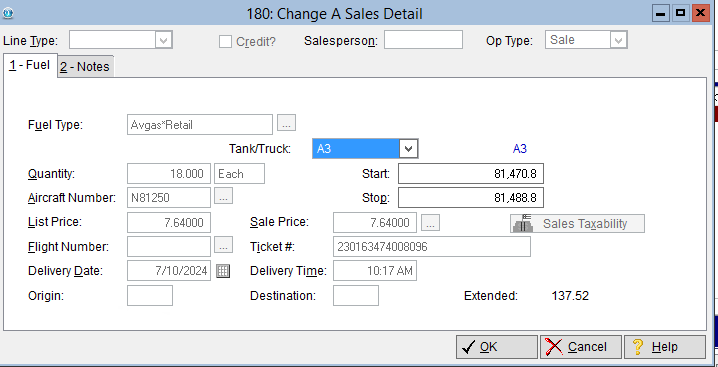
HISTORY OF FLIGHT On July 10, 2024, about 1408 eastern daylight time, a Piper PA-28-161, N81250, was substantially damaged when it was involved in an accident near West Palm Beach, Florida. The flight instructor and private pilot were fatally injured. The airplane was operated as a Title 14 Code of Federal Regulations Part 91 instructional flight. According to air traffic control information obtained from the Federal Aviation Administration, the airplane departed Sarasota Bradenton International Airport (SRQ), Sarasota, Florida, at 1121. The airplane flew east over Satellite Beach and performed maneuvers over the ocean before flying to Melbourne Orlando International Airport (MLB), Melbourne, Florida, where it performed a touch-and-go landing at 1247. The airplane then flew south to North Palm Beach County General Aviation Airport (F45), West Palm Beach, Florida, where it performed a touch-and-go landing. During the subsequent takeoff, the airplane reached an altitude of 75 ft above ground level (agl), made a right turn, and was about 25 ft agl above a pond at the last recorded data point. A witness at the airport stated that he observed an airplane perform a touch-and-go landing on runway 27L. The airplane took off, performed a 180° descending right turn, and disappeared behind trees. He then heard the airplane splash into water. He and another person drove to the pond to render assistance. An airport security video captured the airplane perform a touch-and-go landing, and during the takeoff, at an altitude about 75 ft agl, the airplane made a right 180° turn and disappeared from view behind trees. AIRCRAFT INFORMATION According to a mechanic, on or about July 2, 2024, he removed the airplane’s previously installed Lycoming O-320-D3G engine and installed a Lycoming O-320-D2B. He further modified the engine to a O-320-D2A by replacing the Bendix magnetos with Slick magnetos. The owner of the airplane then supplied the mechanic with two SureFly electronic ignition modules, installed under a supplemental type certificate (STC) that also required the installation of a backup battery system. There were no logbook entries associated with the work performed. The mechanic stated that he did not complete the logbook endorsements because he became sick and was home for several days. The airplane manager stated that four different pilots flew the airplane about 14 hours after the maintenance was performed. The last annual inspection was completed on December 8, 2023, at a tachometer time of 6,133.5 hours. The tachometer was digital and destroyed by water; therefore, the time since the annual inspection could not be determined. The airplane’s Pilot’s Operating Handbook stated that the airplane’s useable fuel capacity was 48 gallons. Although a fuel receipt indicated that 18 gallons of fuel was added to the airplane before departing on the flight, the total amount of fuel onboard at the time of departure could not be determined. The POH also stated that theairplane’s fuel consumption rate in cruise flight at best economy was approximately 8.5 gallons per hour. WRECKAGE AND IMPACT INFORMATION The airplane came to rest in a pond about 600 ft to the right of the departure end of runway 27L. The airplane was submerged in about 15 ft of water. The right wing was impact separated and located on the north side of the pond. Flight control cable continuity was confirmed throughout the airframe. The stabilator trim actuator was found with 0.6 inches of extension on the top side of the drum, which corresponded to a partial nose-down trim position. The fuel selector valve was found on the right tank and was in a tactile detent for that position. The valve was functionally tested in both the left and right tank positions. Low-pressure air was applied and air successfully flowed in both fuel selector positions from the wing roots through the selector valve and to the fuel strainer. Additionally, both fuel tank vent lines were unobstructed. The electric fuel pump was removed and functioned when powered with a 12-volt power source. Approximately 12 to 14 gallons of fuel consistent with 100LL aviation gasoline was found in the left main fuel tank. The main fuel tank in the separated right wing contained only water. The engine remained attached to the fuselage at its mount. The mount was impact damaged and the engine was tilted nose-down about 20°. The engine cowling was not present. The induction air box was crushed, and the induction air filter was not observed. The exhaust system was impact damaged but not obstructed. The engine was partially disassembled to facilitate additional examination. Water drained from the engine cylinders when the lower spark plugs were removed. Water and oil drained from the oil sump drain when it was opened. The crankshaft was rotated by turning the propeller and continuity of the crankshaft to the rear accessory gears and to the valve train was confirmed. Compression and suction were confirmed in all four cylinders. The interiors of the cylinders were examined using a lighted borescope and no damage was noted. The propeller remained attached to the engine crankshaft flange. The propeller spinner was impact damaged. No damage was noted to one of the two propeller blades. The other propeller blade was bent aft about 5° about 6 inches from the blade tip. The carburetor remained attached to the engine. The carburetor air box and carburetor heat valve were partially crushed. The throttle cable remained attached to the carburetor throttle control arm. The arm was observed against the full throttle stop. Both electronic magnetos remained attached to the engine. Power was applied to both electronic magnetos. One tower of the left magneto produced spark when the magneto drive was rotated by hand. The right magneto produced no spark when rotated by hand. Water drained from both magnetos when the distributor covers were removed. Both magnetos were set aside to dry overnight. Both magnetos werepowered the following morning and rotated using an electric drill. Neither magneto produced spark from any electrode tower. The electronic magnetos were sent to the manufacturer for further examination and testing. The circuit board and coil pack on both magnetos exhibited corrosion/damage consistent with being submerged under water with power applied. For testing purposes, a new circuit board and coil pack was installed in both magnetos and put on a test bench. Both units passed the test and produced spark on all leads. The right wing center wing box and section of the main spar were sent to the NTSB Materials Laboratory for examination. The examination revealed that the fracture was due to bending overload, and no signs of preexisting damage were noted.
Aircraft
- Registration
- N81250
- Reported as
- Piper PA-28-161
- Category
- Airplane
- Serial number
- 28-8016147
- Built
- 1979
- Airframe hours
- 8,074
- Engine
- Lycoming O-320 SERIES, 160 horsepower, reciprocating
- Damage
- Substantial damage
- Flight
- Instructional · Part 91
- Airworthiness certificate
- Standard, Normal
- Last inspection
- Annual · December 8, 2023
- Departed
- SRQ · Sarasota, FL
- Destination
- Same as departure
- Flight plan
- IFR
- Airport
- F45 · North Palm Beach County General Aviation, runway 27L, 4,300 × 100 ft, asphalt
- Equipment
- Stall warning system, Onboard weather, ADS-B, Electronic multifunction display, Electronic primary flight display
Matched to the registry by N-number and the event date; the registry’s history has gaps, so older matches can be wrong. Compare the reported make and model.
Flight crew · 2
As NTSB recorded them. NTSB leaves out names.
- Role
- Flight instructor
- Age
- 59
- Injuries
- Fatal
- Certificates
- Commercial, Flight instructor
- Airplane ratings
- Single-engine land, Multi-engine land
- Instrument ratings
- Airplane
- Medical
- Class 2, With waivers/limitations
- Seat
- Right
- Flight hours
- 9,000 total · 9,999 in this make and model
- Role
- Pilot
- Age
- 58
- Injuries
- Fatal
- Certificate
- Private
- Airplane ratings
- Single-engine land
- Medical
- Class 3, Without waivers/limitations
- Seat
- Left
- Toxicology
- Performed
- Flight hours
- 164 total · 99 in this make and model
Weather
- Conditions
- Visual (VMC) · Day
- Wind
- 230° at 5 knots
- Visibility
- 10 statute miles
- Lowest ceiling
- 14,000 ft overcast
- Temperature
- 88 °F, dew point 79 °F
- Altimeter
- 30.00 inHg
- Observed at
- PBI, 11 nm away
- METAR
- KPBI 101853Z 23005KT 10SM FEW050 OVC140 31/26 A3000 RMK AO2 SLP160 T03110261
Docket · 17
The files NTSB released with the investigation on April 1, 2025, on NTSB’s docket system: statements, records, photos and specialists’ reports. 44.2 MB in all.
FAA reports on this event · 1
The FAA’s own accident and incident reports, matched to the aircraft by N-number and date.